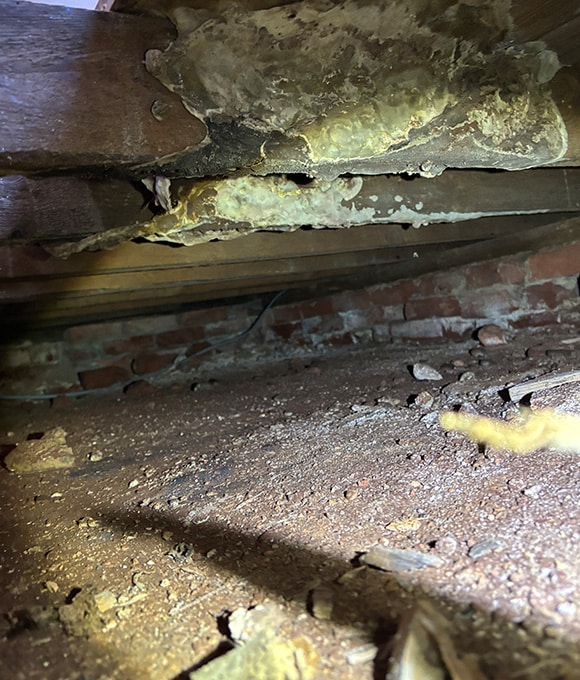
Professional Timber Decay & Infestation Assessments Across London, Kent and East Sussex
Timber plays a critical role in the structural integrity of any building. When decay, moisture, or wood‑boring insects affect these elements, the consequences can be serious, from localised deterioration to significant structural failure. Our professional timber surveys provide clear, evidence‑based assessments of timber condition, decay mechanisms, and infestation activity, ensuring you understand the true extent of the issue and the most appropriate remedial steps.
As qualified specialists with over a decade of experience, we deliver accurate diagnosis, clear reporting, and practical recommendations for homeowners, landlords, agents, and property professionals.
What Is a Timber Survey?
A timber survey is a detailed inspection of structural and joinery timbers to identify:
Our surveys combine building pathology, moisture analysis, and species identification to provide a precise, reliable diagnosis not assumptions or unnecessary treatments.
Why Timber Occurs
Timber decay and infestation are almost always linked to excess moisture. Common causes include:
Leaking gutters, downpipes, or roofs
High external ground levels
Bridged damp proof courses
Poor sub floor ventilation
Plumbing leaks
Condensation and high humidity
Defective pointing or masonry
Blocked air bricks
Long term dampness in concealed voids
Understanding the moisture source is essential treating the timber alone will not resolve the problem.
Why a Professional Timber Survey Matters
A proper timber survey helps you
01
Identify the exact type of decay or infestation
02
Determine whether the issue is active or historic
03
Avoid unnecessary chemical treatments
04
Understand structural implications
05
Prevent further deterioration
06
Receive clear, independent advice
07
Support mortgage, insurance, or pre purchase requirements
Many clients come to us after being told they need expensive treatments that were never required. Our surveys provide clarity, accuracy, and confidence.
Common Signs of Timber Problems
You may need a timber survey if you’ve noticed
Soft, crumbling, or spongy timber
Flaking or cracking paint on wood
Fruiting bodies or mycelium (fungal growth)
Cuboidal cracking (dry rot)
Darkened, damp, or weakened timber
Small round exit holes (woodworm)
Damp Fine dust (frass) beneath timbersthat change with weather
Springy or uneven floors
Musty or fungal odours
Condensation or dampness in sub floor areas
Even minor symptoms can indicate deeper issues especially in older properties.
What We Check During a Timber Survey
Your survey includes a comprehensive inspection of:
Inspection Areas
Floor joists, wall plates, and structural timbers
Roof timbers (where accessible)
Sub floor voids and ventilation pathways
Skirting boards, architraves, and joinery
Moisture levels within and around timber
Fungal growth, mycelium, and decay patterns
External defects contributing to moisture ingress
Airflow, humidity, and environmental conditions
Diagnostic Tools Used
Moisture meters
Hygrometers
Borescopes (where required)
Thermal imaging (optional add on)
Data loggers (optional add on)
Ventilation testing (optional add on)
How We Diagnose Timber Decay & Infestation
Our structured approach includes:
Initial consultation
Understanding the history, symptoms, and concerns.
Internal inspection
Assessing visible timbers, finishes, and moisture patterns
Sub floor or void inspection
Checking ventilation, moisture, and concealed timbers (where accessible).
Species identification
Determining the exact fungus or beetle involved.
Moisture analysis
Identifying the source of dampness affecting the timber.
Cause and risk assessment
Evaluating structural implications and future risk.
Recommendations
Providing clear, practical steps for repair, treatment, and prevention.
Report Includes
Summary of findings
Identified decay or infestation
Species identification (fungal or beetle)
Moisture readings and analysis
Photographs and evidence
Structural risk assessment
Practical recommendations for repair or treatment
Advice on moisture control and ventilation
Optional add on results (thermal imaging, data logging, ventilation testing)
Reports are written in a clean, modern, easy‑to‑understand format suitable for contractors, insurers, and property professionals.
Who This Service Is For
Our timber surveys are ideal for:
Homeowners concerned about timber decay
Buyers needing clarity before purchase
Landlords and agents managing tenant issues
Properties with damp, mould, or ventilation issues
Surveyors needing specialist input
Older buildings with concealed timber structures
Why Choose Damp Solve
CSRT & CSSW qualified surveyor
Over a decade of specialist experience
Independent, evidence based advice
No unnecessary chemical treatments
Clear, premium quality reporting
Coverage across London & the South East
Trusted by homeowners, agents, and professionals
Optional Add Ons
Enhance your damp survey with advanced diagnostics