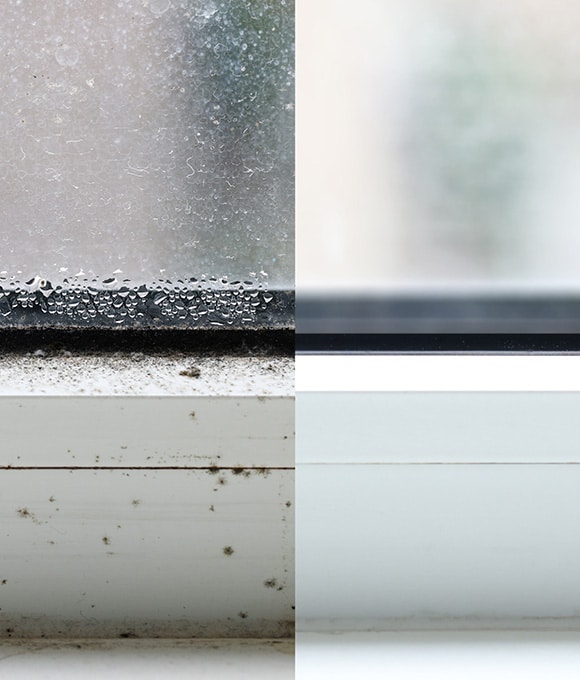
Condensation Surveys in London, Kent & East Sussex
Professional Condensation, Mould & Ventilation Assessments Across London, Kent and East Sussex
Condensation is one of the most common moisture issues affecting UK homes yet it is also one of the most misunderstood. Left unresolved, it can lead to persistent black mould, poor indoor air quality, damage to finishes, and long‑term health concerns. Our professional condensation surveys provide clear, evidence‑based diagnosis of why condensation is occurring and what needs to be done to prevent it.
We combine building science, ventilation analysis, moisture profiling, and environmental assessment to deliver accurate, practical, and tailored recommendations for your property.
What Is a Condensation Survey?
A condensation survey is a detailed investigation into the moisture behaviour, ventilation performance, and environmental conditions within a property. We assess:
Humidity levels and moisture production
Ventilation systems and airflow performance
Thermal bridging and cold surfaces
Heating patterns and building use
Mould growth and risk areas
Building defects contributing to moisture imbalance
The goal is simple: to identify the root cause of condensation and provide a clear, practical plan to resolve it.
Why Condensation Happens
Condensation occurs when warm, moisture‑laden air meets a cold surface. But the underlying reasons vary widely. Common causes include:
Inadequate ventilation
Underperforming or faulty extractor fans
High moisture production
Cold bridging at external walls or junctions
Poor insulation or thermal performance
Inconsistent heating
Blocked or restricted airflow pathways
Window trickle vents closed or missing
Occupancy patterns and lifestyle factors
Every property behaves differently — which is why a professional assessment is essential.
Many clients have tried dehumidifiers, mould sprays, or ventilation gadgets without success. Our surveys provide clarity, accuracy, and long‑term solutions.
Common Signs of Condensation & Mould
You may need a condensation survey if you’ve noticed:
Black mould on walls, ceilings, or window reveals
Water droplets on windows
Damp or musty smells
Peeling paint or wallpaper
Condensation on cold surfaces
Mould behind furniture or in corners
Cold patches on walls
Persistent moisture in bathrooms or kitchens
High humidity or poor air quality
These symptoms often indicate deeper ventilation or thermal issues.
What We Check During a Condensation Survey
Your survey includes a comprehensive assessment of:
Internal Environment
Humidity and temperature levels
Heating patterns and thermal comfort
Moisture production sources
Airflow pathways and ventilation habits
Ventilation Performance
Extractor fan airflow testing
Kitchen and bathroom ventilation
Trickle vents and passive vents
Air changes and cross ventilation
Building Fabric
Cold bridging and thermal weak points
Insulation levels (where visible)
Window and door performance
External walls and exposure
Moisture & Mould Assessment
Mould patterns and risk zones
Moisture readings
Surface temperatures
Dew point analysis
Diagnostic Tools Used
Hygrometers
Moisture meters
Thermal imaging (optional add on)
Data loggers (optional add on)
Vane anemometers for airflow testing
How We Diagnose Condensation
Our structured approach includes:
Initial consultation
Understanding the history, symptoms, and concerns.
Environmental assessment
Measuring humidity, temperature, and dew‑point conditions.
Ventilation analysis
Testing extractor fans and airflow performance.
Thermal assessment
Identifying cold bridging and temperature variations.
Moisture profiling
Checking for other moisture sources (penetrating damp, leaks, etc.).
Cause analysis
Determining the root cause using building science principles.
Recommendations
Providing clear, practical steps to resolve the issue permanently.
Report Includes
Summary of findings
Humidity and temperature analysis
Ventilation performance results
Thermal bridging observations
Photographs and evidence
Mould assessment and risk areas
Practical recommendations for improvement
Optional add on results (thermal imaging, data logging, ventilation testing)
Reports are written in a clean, modern, easy‑to‑understand format suitable for homeowners, landlords, agents, and contractors.
Who This Service Is For
Our condensation surveys are ideal for:
Homeowners experiencing mould or poor air quality
Buyers needing clarity before purchase
Landlords and agents managing tenant issues
Properties with persistent bathroom or kitchen moisture
Flats and apartments with limited ventilation
Families concerned about health impacts
Older buildings with cold bridging issues
Why Choose Damp Solve
CSRT qualified moisture specialist
Over a decade of diagnostic experience
Independent, evidence based advice
No unnecessary or ineffective treatments
Clear, premium quality reporting
Coverage across London & the South East
Trusted by homeowners, agents, and professionals
Optional Add Ons
Enhance your damp survey with advanced diagnostics