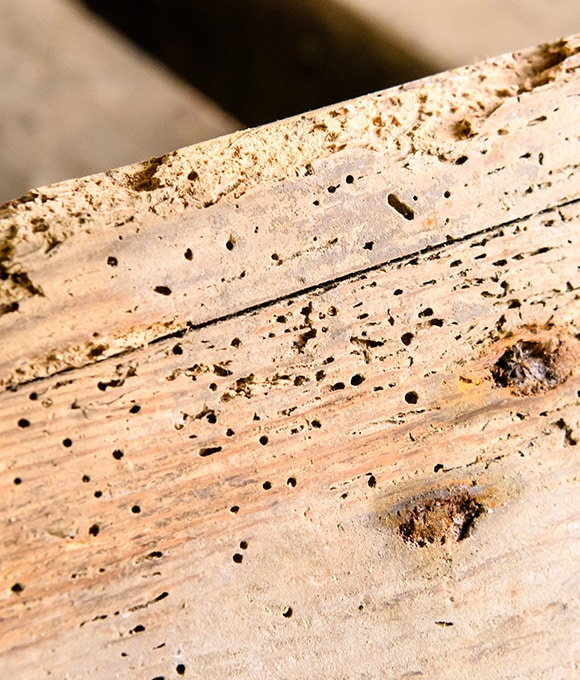
Professional Wood Boring Beetle Assessments Across London, Kent and East Sussex
Woodworm is the collective term for wood‑boring beetles which can cause significant damage to structural and joinery timbers if left untreated. However, not all infestations are active, and not all require chemical treatment. A professional woodworm survey provides accurate identification, activity assessment, and clear, evidence‑based recommendations, ensuring you only carry out the work that is genuinely necessary.
At Damp Solve Surveying, we deliver qualified timber investigations backed by over a decade of specialist experience. Our surveys are trusted by homeowners, landlords, agents, and property professionals.
What Is a Woodworm Survey?
A woodworm survey is a detailed inspection of timber to determine:
Which beetle species is present
Whether the infestation is active or historic
How extensive the damage is
What moisture conditions are contributing to activity
Whether treatment or repair is required
How to prevent future infestation
We combine species identification, moisture analysis, and building pathology to provide a precise, reliable diagnosis not guesswork or unnecessary treatments.
Why Woodworm Occurs
Wood‑boring beetles are attracted to timber with elevated moisture levels or specific characteristics. Common causes include:
High humidity or condensation
Poor sub floor ventilation
Damp timbers due to leaks or bridging
Older softwood timbers with sapwood content
Long term moisture exposure in concealed voids
Historic infestation in period properties
Most infestations begin because the timber has become damp which is why identifying the moisture source is essential.
Why a Professional Woodworm Survey Matters
A proper woodworm survey helps you:
01
Avoid unnecessary chemical treatments
02
Understand whether the infestation is active or historic
03
Protect the structural integrity of your property
04
Identify moisture issues contributing to activity
05
Receive clear, independent advice
06
Support mortgage, insurance, or pre purchase requirements
Many clients are told they need treatment when the infestation is long dead. Our surveys provide clarity, accuracy, and confidence.
Common Signs of Woodworm
You may need a woodworm survey if you’ve noticed:
Small round exit holes in timber
Fine dust (frass) beneath or around timbers
Weak, soft, or crumbling wood
Damaged floorboards or joists
Beetles emerging in spring or summer
Tunnels visible in cross sections of timber
Flaking paint revealing holes beneath
Damp or musty odours in sub floor areas
Even minor signs can indicate deeper issues especially in older buildings.
What We Check During a Woodworm Survey
Your survey includes a comprehensive inspection of:
Structural Timbers
Floor joists and wall plates
Roof timbers (where accessible)
Sub floor timbers and ventilation pathways
Joinery Timbers
Skirting boards
Architraves
Door frames
Window frames
Environmental Conditions
Moisture levels in timber
Humidity and temperature
Ventilation performance
Signs of dampness or leaks
Species Identification
Common Furniture Beetle (Anobium punctatum)
Deathwatch Beetle (Xestobium rufovillosum)
Wood boring Weevils
House Longhorn Beetle (rare, but serious)
Diagnostic Tools Used
Hygrometers
Moisture meters
Borescopes (where required)
Thermal imaging (optional add on)
Data logging (optional add on)
Ventilation testing (optional add on)
How We Diagnose Woodworm
Our structured approach includes:
Initial consultation
Understanding the history, symptoms, and concerns.
Internal inspection
Assessing visible timbers, finishes, and moisture patterns.
Sub floor or void inspection
Checking ventilation, moisture, and concealed timbers (where accessible).
Species identification
Determining the exact beetle involved.
Activity assessment
Identifying whether the infestation is active or historic.
Moisture analysis
Identifying the source of dampness affecting the timber.
Recommendations
Providing clear, practical steps for treatment, repair, and prevention.
Report Includes
Summary of findings
Species identification
Activity assessment (active or historic)
Moisture readings and analysis
Photographs and evidence
Structural risk assessment
Practical recommendations for treatment or repair
Advice on moisture control and ventilation
Optional add on results (thermal imaging, data logging, ventilation testing)
Reports are written in a clean, modern, easy‑to‑understand format suitable for contractors, insurers, and property professionals.
Who This Service Is For
Our woodworm surveys are ideal for:
Homeowners concerned about timber damage
Buyers needing clarity before purchase
Landlords and agents managing tenant issues
Properties with damp, mould, or ventilation issues
Surveyors requiring specialist input
Older buildings with concealed timber structures
Why Choose Damp Solve
CSRT qualified timber specialist
Over a decade of diagnostic experience
Independent, evidence based advice
No unnecessary chemical treatments
Clear, premium quality reporting
Coverage across London & the South East
Trusted by homeowners, agents, and professionals
Optional Add Ons
Enhance your damp survey with advanced diagnostics