Specialist Dry Rot Investigation & Diagnostic Reporting Across London, Kent and East Sussex
Dry rot is one of the most serious forms of timber decay found in UK buildings. When left untreated, it can spread rapidly through masonry, plaster, and concealed voids compromising structural integrity and causing significant repair costs. A professional dry rot survey provides accurate diagnosis, clear identification of moisture sources, and practical, evidence‑based recommendations to ensure the problem is fully resolved and cannot return.
As qualified timber specialists, Damp Solve Surveying delivers thorough, methodical dry rot investigations trusted by homeowners, landlords, agents, and property professionals.
What Is Dry Rot?
Dry rot (Serpula lacrymans) is a destructive wood‑decaying fungus that thrives in damp, poorly ventilated environments. It can:
Break down structural timbers
Spread across masonry and plaster
Travel through hidden voids
Cause significant structural weakening
List Produce spores that spread rapidly
Unlike wet rot, dry rot has the ability to transport moisture, allowing it to grow across dry materials in search of new timber.
This makes accurate diagnosis and moisture control essential.
Why Dry Rot Occurs
Dry rot only develops when the right conditions are present. These typically include:
Elevated moisture levels in timber
Poor sub floor ventilation
Leaking roofs, gutters, or downpipes
Bridged damp proof courses
High external ground levels
Long term condensation or humidity
Defective pointing or masonry
Water ingress into concealed voids
Damp basements or cellars
Dry rot is always a symptom of a moisture problem not the cause. Identifying and resolving that moisture source is the key to long‑term success.
Why a Professional Dry Rot Survey Matters
A proper dry rot survey helps you:
01
Identify the exact type and extent of decay
02
Locate the moisture source feeding the fungus
03
Prevent unnecessary or ineffective treatments
04
Understand structural implications
05
Avoid repeat outbreaks
06
Receive independent, specialist advice
07
Support mortgage, insurance, or pre purchase requirements
Many clients discover wet rot only after noticing soft floors or damp smells. Our surveys provide clarity, accuracy, and confidence.
Common Signs of Dry Rot
You may need a dry rot survey if you’ve noticed:
Cuboidal cracking in timber
Soft, crumbly, or brittle wood
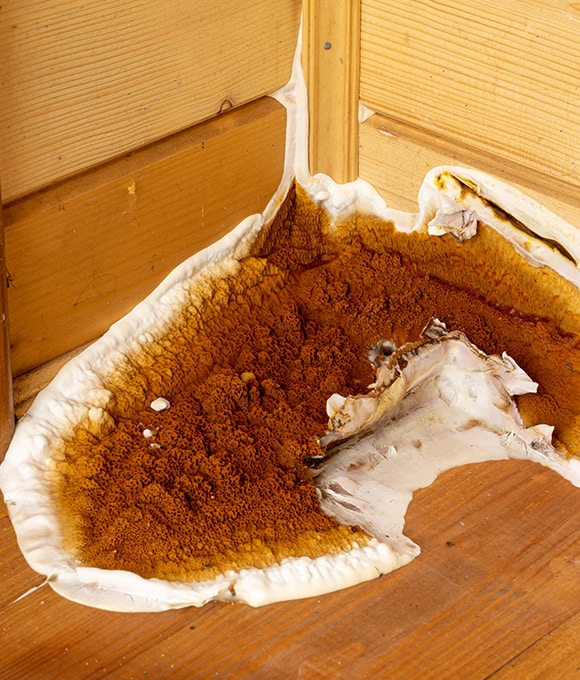
A mushroom like fruiting body (rust red with white edges)
White or grey cotton wool like mycelium
A musty, fungal smell
Timber shrinking or warping
Cracking or discoloured plaster
Dampness in sub floor or concealed areas
Rust coloured spore dust
Dry rot can be hidden behind walls, under floors, or within voids early diagnosis is essential.
What We Check During a Dry Rot Survey
Your survey includes a comprehensive inspection of:
Timber Condition
Floor joists, wall plates, and structural timbers
Skirting boards, architraves, and joinery
Roof timbers (where accessible)
Timber moisture content and decay patterns
Fungal Identification
Mycelium type and growth pattern
Fruiting bodies and spore production
Distinguishing dry rot from wet rot or other fungi